
· Grubb & Nadler
Protea Family Care Sheet
Plant genera in the protea family (Proteaceae) include Banksia (Australia), Grevillea (Australia), Hakea (Australia), Isopogon (Australia), Leucadendron (South Africa), Leucospermum (South Africa), and Protea (South Africa).
Plants in the Proteaceae share several requirements and characteristics:
- They need, or prefer, good drainage.
- They do not tolerate phosphate fertilizer.
- They prefer deep, infrequent watering.
- They have highly showy flowers, foliage, or both.
- Most make excellent cut flowers.
- They do better in poor soils with minimal care.
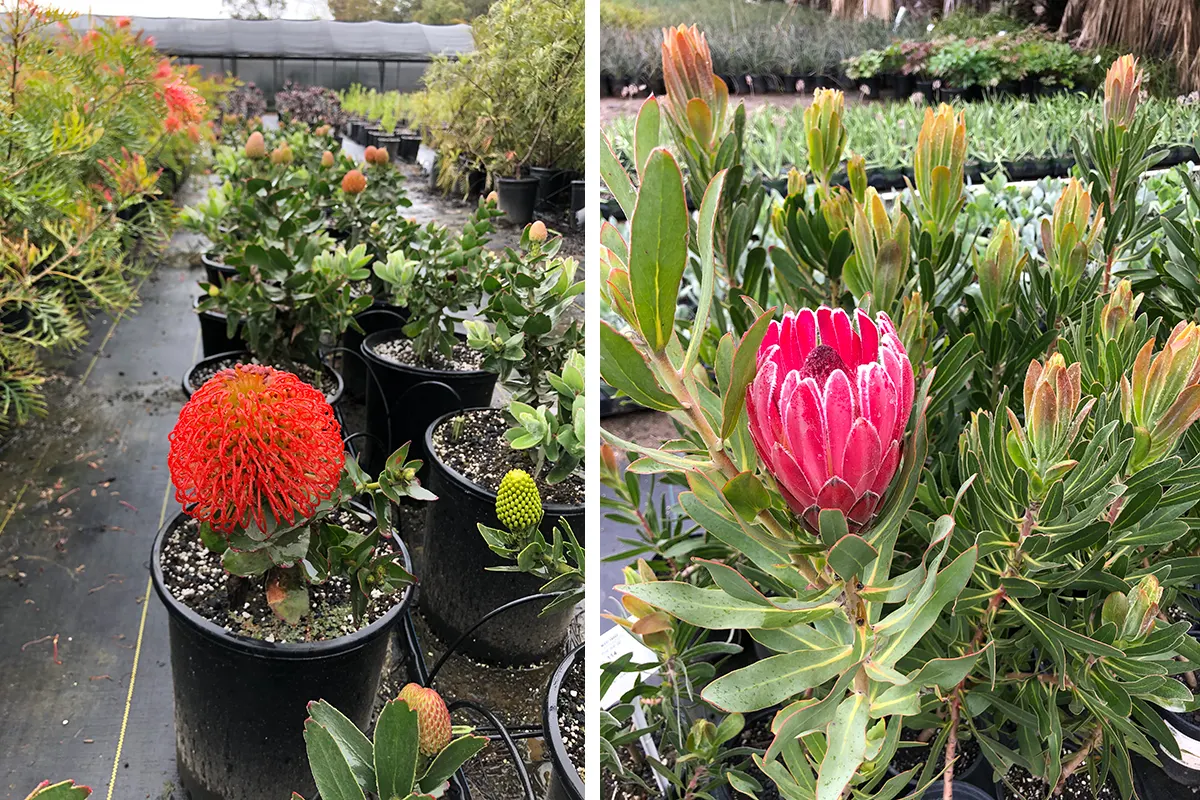
Sun
Most proteaceous plants want full sun, meaning 5 or more hours a day. However, they tolerate fog quite well and are seen thriving in San Francisco’s foggiest neighborhoods.
Soil
Plants in this family typically prefer quick-draining, acidic, low-nutrient soils. San Francisco’s sandy soils tend to be well drained, poor in nutrients, and slightly acid. Clay soils, however, are different. Most California soils are heavy clay or silt, and can be alkaline (especially in the south and inland), high in phosphorus, and poorly drained.
This can create problems if these requirements are ignored. When planting in the ground, amend the soil with rock for better drainage: pumice or any kind of agricultural-grade gravel will work. These plants thrive in pots, where drainage and nutrient content can be controlled. We recommend cactus mix.
Fertilizing
Refraining from fertilizing is a good bet. These plants have evolved to thrive in very poor soils. If you do fertilize, use non-synthetic fertilizers, and infrequently: fish emulsion or cottonseed meal is best. Feeding with chelated iron and Epsom salts in the spring is also helpful. Sul-Po-Mag can help the genera from Australia (Banksia, Grevillea, Hakea, Isopogon).
Fertilizer with phosphorus will poison these plants and may kill them.
Pruning
Tip pruning or light pruning when young is recommended for proteaceous plants. It helps prolong the life of most in this group, and it increases vigor and gives a better shape.
Many Proteaceae take on a tree-like look if left unpruned, or can be pruned routinely for a bushier look. However, don’t cut back more than one-third of the growth, and never cut back to older branches that have dropped their leaves: most Proteaceae will not sprout from such hard pruning.
Water
These plants are drought tolerant, and all need less than average water. Many will thrive in the ground with little supplemental water once established, especially on the coast. Some will tolerate normal (moist) garden conditions, but most will not.
Don’t use proteaceous plants in highly watered areas, such as near lawns or annual color beds. Deep but infrequent watering during the dry season is best. Of course, this only applies to established plants: plants in the ground less than two years, and container plants of any age, need closer attention and judicious watering.
In pots, these plants can go dry between waterings, but won’t want to stay dry for very long. Some can get very large even in a small pot, and will then need more water.
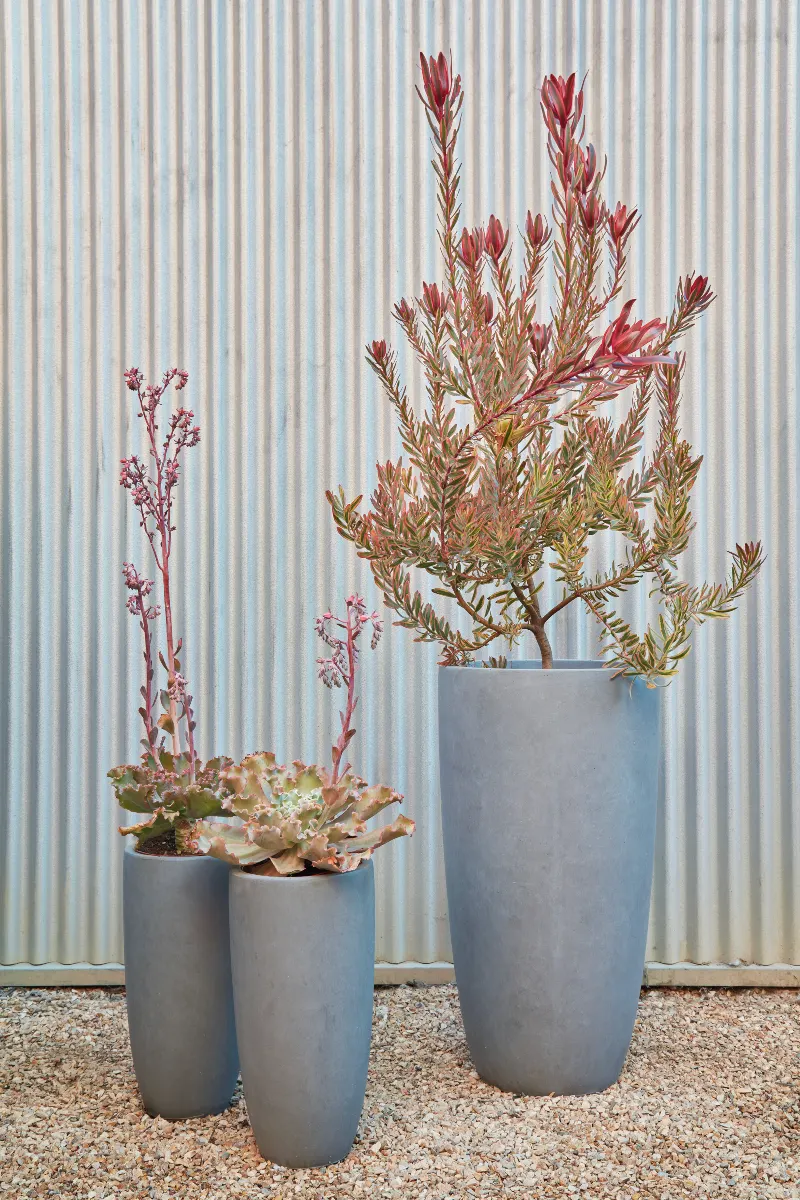
In pots
Many Proteaceae will thrive in pots. Use cactus mix, and water the plants well until they are established. In a pot, with enough water, they tolerate wind well, even cold, foggy wind.
Growing plants in this family can be highly rewarding. They are among the showiest and most ornate of all plants in bloom, they make excellent cut flowers, and they have few natural pests or diseases. Try them out and enjoy.
For more information and inspiration in your inbox, subscribe to our newsletter.